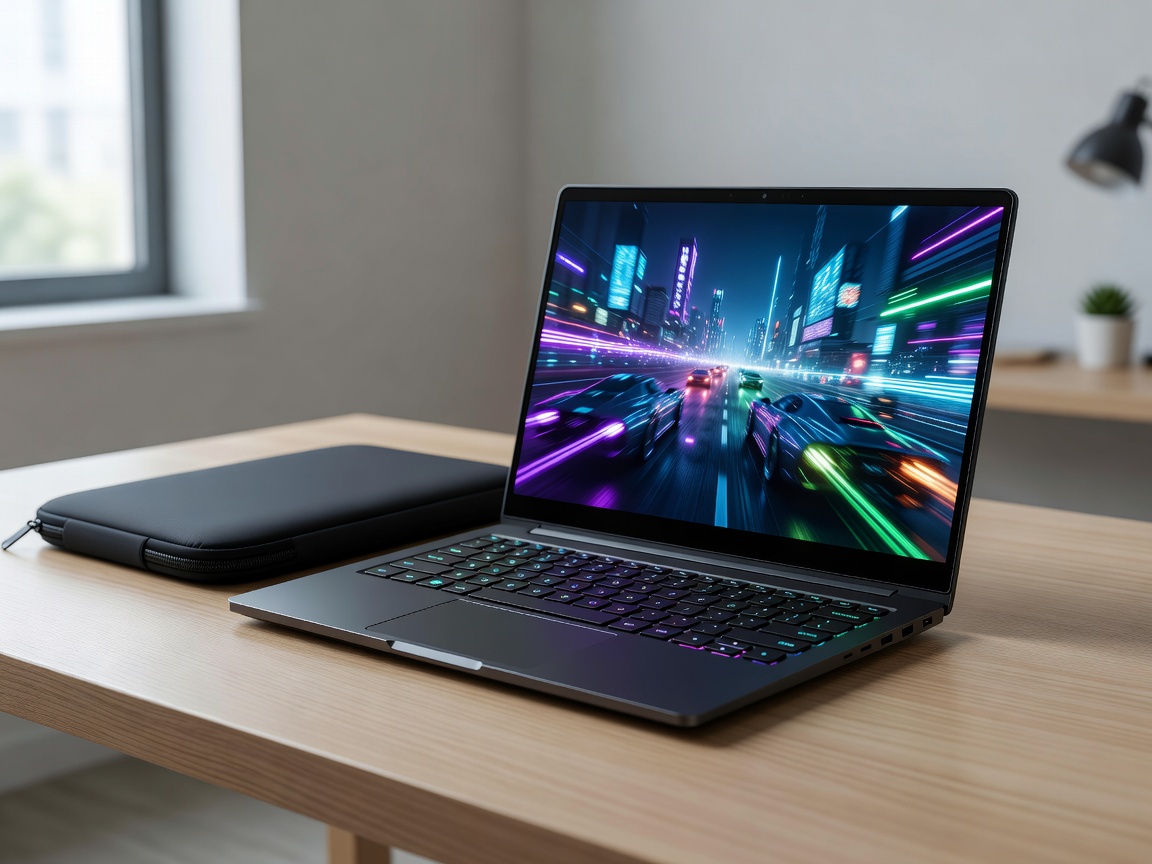
The gaming laptop ecosystem in 2026 presents an acute dichotomy. At one extreme lie 18-inch desktop replacements housing massive heatsinks, high-wattage power supplies, and mechanical keyboards. At the other sit precision-milled 14-inch and 16-inch ultra-portables striving to deliver gaming performance in form factors tailored for daily commutes and hybrid professional work.
The Reality of Desktop Replacements (DTRs)
Desktop replacements are built for stationary setups where the user demands maximum mobile throughput without needing an external desktop tower:
- Thermal Dominance: With chassis thicknesses frequently exceeding 25 to 30 millimeters, DTRs house large-diameter fan impellers that move vast volumes of air at low RPM, reducing high-pitch whine.
- Upgradability and I/O: Desktop replacements routinely offer multiple M.2 NVMe slots (supporting RAID arrays) and user-replaceable SO-DIMM memory slots, alongside full-sized RJ45 2.5GbE Ethernet jacks, mini-DisplayPort outs, and SD card readers.
- The Travel Penalty: Carrying a 3.2-kilogram chassis plus an 800-gram 330W GaN power brick transforms daily commuting into a burdensome chore.
Thin & Light Portables: Compromise Engineering
Slim gaming notebooks typically range between 1.7kg and 2.2kg. Achieving this lightness requires tight compromises across internal components:
- Soldered Memory Constraints: To reduce motherboard z-height, manufacturers frequently solder compact LPDDR5X RAM modules. This fixes total system memory at the time of purchase with zero post-purchase expansion potential.
- Aggressive Skin Temperatures: Because thin aluminum unibodies act as passive heat sinks, deck temperatures around the keyboard WASD zone and upper function row can become noticeably warm during extended sessions.
Form Factor Tradeoff Comparison
| Factor | Desktop Replacement (17"–18") | Balanced Gaming (16") | Ultra-Portable Gaming (14") |
|---|---|---|---|
| Average Bare Weight | 3.0kg – 3.8kg | 2.2kg – 2.5kg | 1.6kg – 1.9kg |
| Sustained System Power | 200W – 250W Combined | 150W – 190W Combined | 90W – 125W Combined |
| Travel Profile | Luggage / Desk-to-Desk | Standard Backpack Daily | Messenger Bag / Coffee Shop |
| Battery Capacity | 90Wh – 99.9Wh (FAA Max) | 80Wh – 99.9Wh | 70Wh – 75Wh |
| Battery Gaming Runtime | 40 – 60 Minutes (Throttled) | 50 – 70 Minutes (Throttled) | 45 – 65 Minutes (Throttled) |
The Battery Gaming Myth and 99.9Wh Ceiling
A frequent misconception is that gaming laptops can deliver full frame rates while running on internal battery power. Aviation security standards (FAA/ICAO) cap passenger transport of lithium-ion batteries strictly at 100 Watt-hours. A gaming system demanding 200 Watts under full graphics load would deplete a 99.9Wh battery in under thirty minutes, while subjecting chemical cells to severe discharge heat.
Consequently, mobile systems automatically down-clock GPU clocks and throttle display refresh rates down to 30 or 60 FPS the instant the DC adapter is unplugged. The battery in a gaming laptop functions as an uninterruptible power supply for normal productivity and browsing, rather than a continuous conduit for unplugged AAA gaming.